Model Context Protocol Security Vulnerabilities in MCP Server Implementations
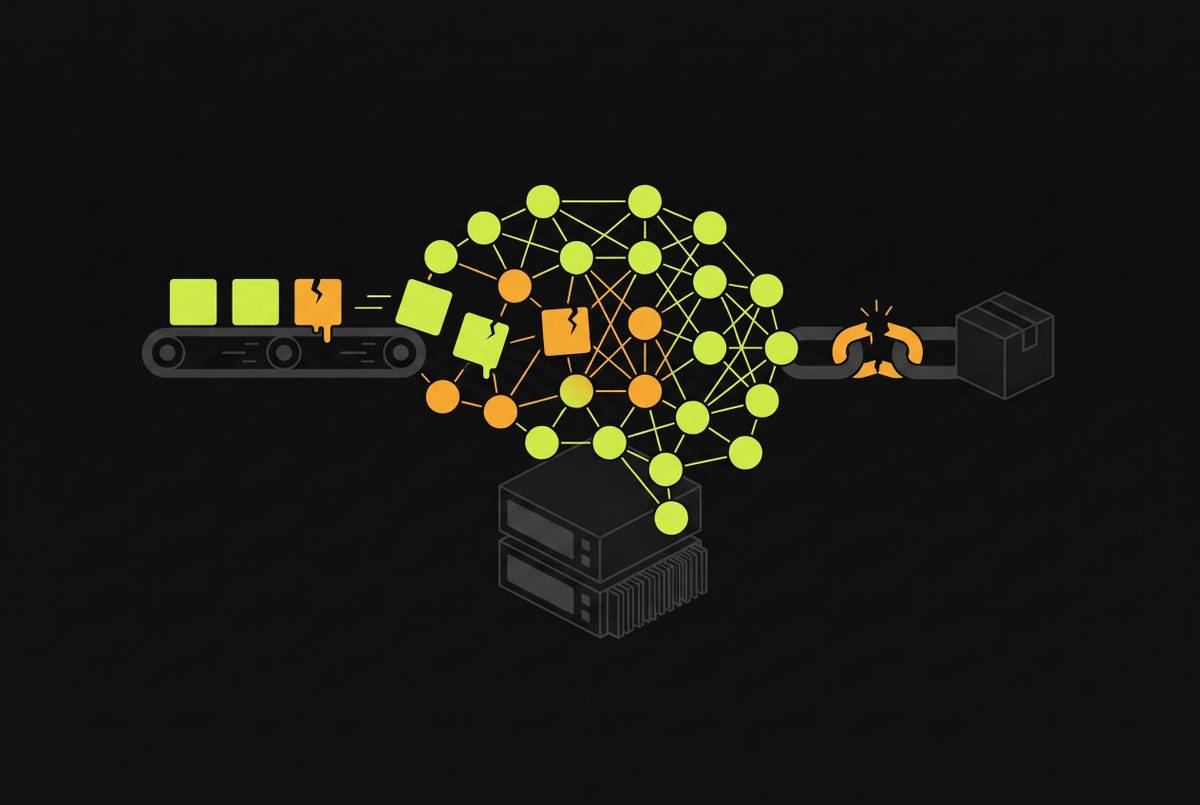
MCP's risks span poisoned text, exposed endpoints, and excess privilege.
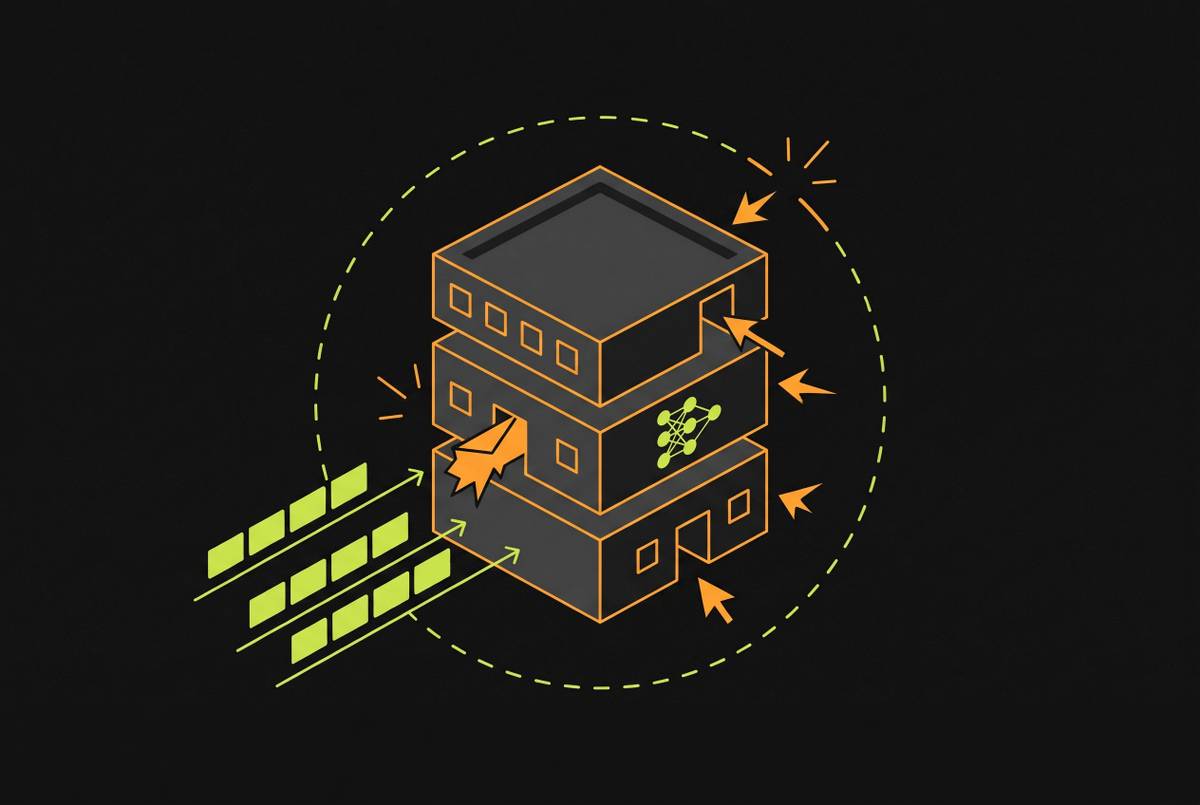
MCP server security is not just API security with an AI label. Model Context Protocol implementations expose both executable code and the text that tells an agent what to do. Securing a deployment starts with understanding those distinct attack paths, including how a poisoned description, an open endpoint, or an overpowered server can turn legitimate tool access into unauthorized action.
Why MCP's architecture creates a structurally new attack surface
Anthropic introduced MCP in November 2024 to standardize how LLM-based agents access tools, resources, and prompts through JSON-RPC 2.0. Hosts such as Claude Desktop, Cursor, and ChatGPT contain clients that connect to external servers. Those servers let agents work with files, databases, and web services. The server provides the tool, but the agent interprets its description. That split creates a new trust boundary.
The agent chooses tools based on how it reads natural-language descriptions at inference time, as well as on application code. An LLM cannot syntactically separate instructions from data, so attacker-controlled text can influence what it does. The CASCADE audit identifies user prompts, tool descriptions, parameter schemas, and tool outputs as separate injection entry points. Traditional code and API checks do not cover that semantic attack surface. MCP therefore needs a threat taxonomy built around its own protocol.
How the MCP threat taxonomy is organized and why the categories matter
Vulcan Research, AIFT published MCP-38 in March 2026, deriving 38 threat categories from protocol elements such as discovery, invocation, transport selection, and multi-server routing. The taxonomy maps those threats to STRIDE, OWASP LLM Top 10 (2025), and OWASP Agentic Applications Top 10 (2026). The protocol adds failure modes they were not built to describe.
MCPGuard organizes the landscape into three broad groups. Agent hijacking takes advantage of how the protocol is designed through attacks such as tool poisoning and indirect prompt injection. Traditional web vulnerabilities affect server code through flaws such as command injection, SSRF, and hardcoded secrets. Supply chain attacks target how servers are distributed and the dependencies they use. These categories need different tests and controls because they cross different trust boundaries.
Tool poisoning: how malicious instructions reach the agent through tool metadata
Tool poisoning places malicious instructions inside metadata that clients add to the agent’s context. The attacker does not need to alter the user’s request. A tool description can instead tell the agent to ignore another tool or perform an unrelated action. Schema poisoning moves those instructions into parameter fields, while tool shadowing uses them to override legitimate tools. Both exploit text presented as operational guidance.
The New York Institute of Technology threat modeling paper found that five of seven clients it tested had no static validation mechanisms. The same study scored tool poisoning 46.5/50 on the DREAD scale. User approval offers an incomplete backstop because complete descriptions are often not visible at runtime. A clean-looking approval dialog is not proof of clean metadata.
The Deadbugz campaign in August 2026 illustrated a runtime-gated variant. Its malicious server behaved normally for the first three tool calls, then changed its instructions to harvest SSH keys, AWS credentials, and shell history. Its early behavior made the server seem safe to trust.
Indirect prompt injection through tool outputs: when retrieved content becomes an attack vector
Indirect prompt injection can work even when the server is not malicious. An authorized tool can correctly retrieve a document, issue, or web page that contains attacker-written instructions. The failure occurs when the agent treats that content as authority. The attack enters through the tool output. Validating tool metadata alone cannot address it.
The MCP governance paper documents a GitHub MCP incident on May 26, 2025 in which an agent read a malicious issue in a public repository. Embedded instructions directed it to retrieve data from the owner’s private repositories and publish that data in a public pull request.
A page can instruct an agent to fetch a cloud metadata endpoint through a URL-fetching tool, turning content manipulation into a request from inside the network. Instructions that pass schema validation as ordinary document text connect prompt injection directly to server-side request forgery, or SSRF.
SSRF and command injection: conventional web vulnerabilities wearing new uniforms
MCP servers still parse requests and invoke backend software. They remain exposed to familiar implementation flaws. An unrestricted URL-fetching tool can reach private addresses, localhost, or the cloud metadata endpoint at 169.254.169.254, which can return IAM security credentials. The preceding injection chain gives an attacker a way to make the agent supply that destination.
Microsoft’s Azure MCP Server had an SSRF vulnerability, CVE-2026-26118, rated CVSS 8.8. Microsoft patched it on March 10, 2026 in versions 1.0.2 and 2.0.0-beta.17. Grafana MCP had CVE-2026-19516, rated CVSS 9.1, involving SSRF through the caller-controlled X-Grafana-URL header. That flaw could be chained with a separate session-spoofing weakness without its own CVE. Official implementations are not exempt from these failures.
MCPGuard identifies command injection and path traversal as dominant code-level vulnerability classes. Framelink Figma MCP’s CVE-2025-53967 shows how those flaws can connect to agent behavior. Malicious text in a Figma file could induce a crafted URL that reached a vulnerable curl fallback. The server had hundreds of thousands of downloads at disclosure, giving one implementation flaw a wide reach.
Unauthenticated endpoints: how the protocol's authentication gap became an ecosystem-wide vulnerability
OAuth support was absent from MCP’s early specification and arrived only in March 2025. Implementation has lagged behind the specification. That gap leaves exposed endpoints accepting calls without establishing who is making them. Because servers often hold tokens, database credentials, or cloud keys, access to a tool can also mean access to downstream systems. Authentication protects more than the endpoint itself.
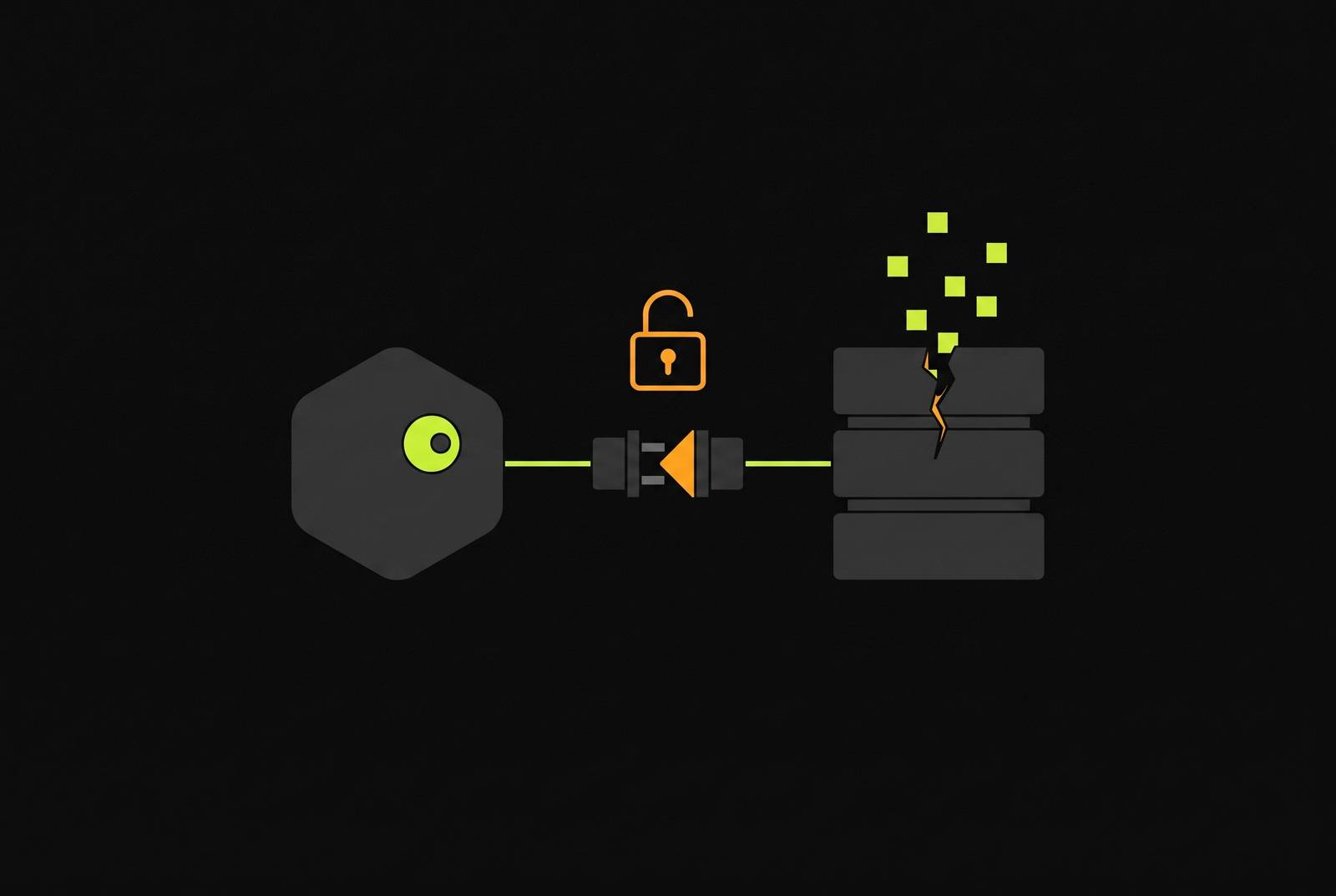
The Dolt MCP case in August 2026 showed why an authentication check is not enough. Requests with invalid tokens received a 401 response, but the server continued processing them. The error response did not stop execution. For systems that hold sensitive data, that failure breaks logical access requirements and technical safeguards and weakens the security checklist.
Hardcoded secrets and over-broad permissions: the credential exposure that persists after the pen test ends
Credentials can be exposed before any attacker sends a request. Static API keys and Personal Access Tokens stored in plaintext configuration files support 53% of MCP servers. A developer configuration may contain AWS credentials, GitHub SSH keys, database passwords, and SaaS API keys together. Any process able to read the file can reach those secrets. The configuration becomes a concentration point for downstream access.
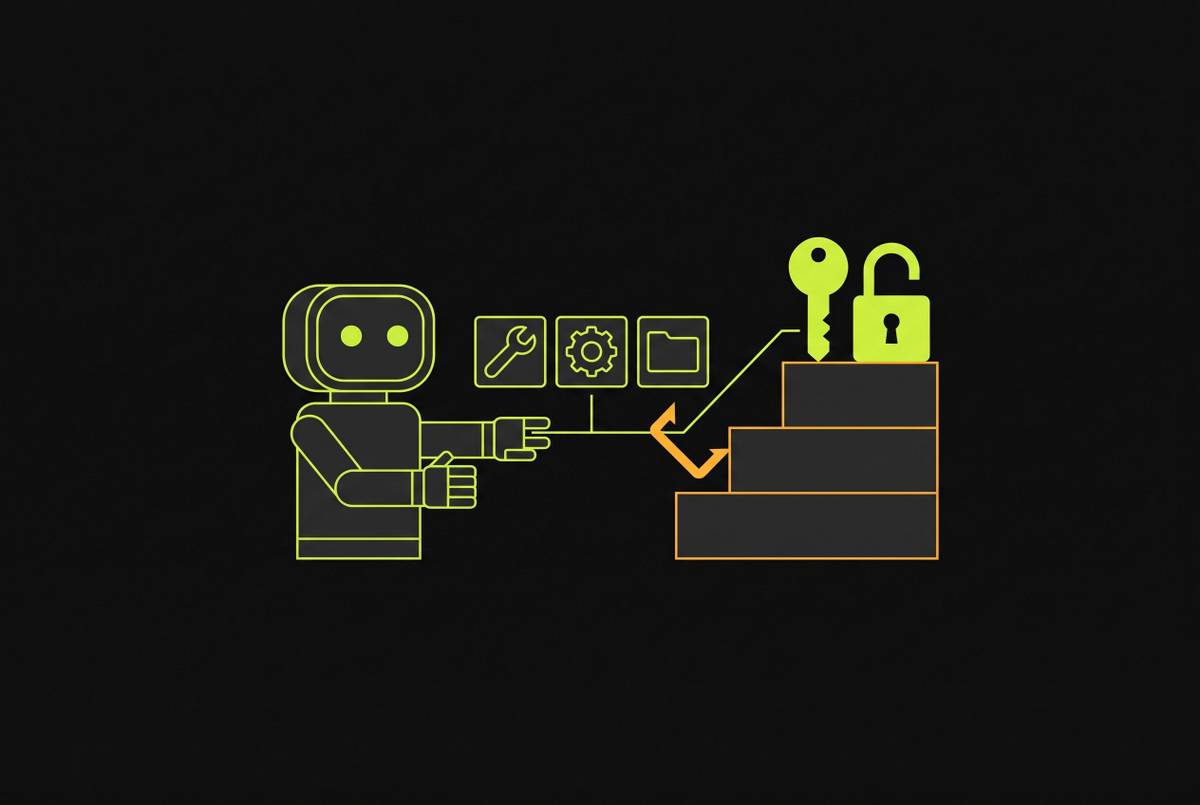
The stdio privilege model deepens that exposure. An MCP stdio server runs with the user’s OS-level access, including readable files, runnable commands, and unrestricted network access. Those permissions are inherited. MCP does not define native permission scoping for tool access, so enforcement falls to server implementations, and most do not implement it.
This turns a configuration finding into an audit finding. Plaintext keys and excessive access map directly to SOC 2 CC6 logical access controls, ISO 27001 A.9 access control, and HIPAA Technical Safeguard access requirements. The exposure persists after testing unless the underlying configuration and permissions change. A completed pen test does not revoke a credential.
Supply chain compromise: how a trusted server becomes a malicious one
The MCP ecosystem has no unified mechanism for vetting server distribution. Malicious servers can arrive through the same channels as legitimate ones, and installed servers can later change. Defenses at the server level cannot make the server trustworthy when the server itself is hostile. Functional correctness is especially weak evidence here. A backdoored tool may still do the job it claims to do.
The governance paper documents the Postmark MCP backdoor, the first confirmed malicious MCP server in the wild. An unofficial server was modified to add a BCC field to send_email, silently copying outbound email to the attacker. It illustrates the modified-after-install pattern. Deadbugz shows the other route, in which a malicious server spreads through public GitHub pull requests. Its delayed behavior also shows why an initially successful test can miss the payload.
MCPGuard describes MCP Preference Manipulation Attacks as another ecosystem-level tactic. Attackers optimize tool names and descriptions to make agents select malicious servers over legitimate alternatives. Dependency compromise gives attackers another way into this supply chain through the dependencies of the server package a team chooses.
Cross-server cascade and multi-server privilege escalation
Multiple servers share an agent’s context, which lets instructions from one affect calls to another. A poisoned server can direct the agent toward a different connected server that already has access to its final target. That is the basis of parasitic tool chaining.
Tool shadowing can also cross server boundaries when one server’s description stops another server from doing its legitimate work. Runtime changes make the boundary harder to police because MCP provides no native mechanism for detecting post-registration tool changes. Trust at registration is not a lasting guarantee. Consequently, a deployment’s security depends on its weakest connected server, and testing servers in isolation misses the routes between them.
What testing an MCP deployment actually requires
An MCP assessment must use both conventional application testing and agentic red teaming, which tries to make an agent misuse tools it is authorized to use. Neither discipline covers the whole system alone. Transport testing checks how stdio subprocesses are handled and how HTTP is exposed, and checks authentication, encryption, and replay protection separately for each transport type. Authentication and authorization testing covers OAuth 2.1, PKCE, token audience binding, scope enforcement, and confused-deputy paths.
The remaining layers examine what happens after access. Tool-definition testing covers description integrity, strict schemas, and hidden instructions, while implementation testing covers injection, traversal, SSRF, deserialization, and secret handling. Agent-behavior testing probes prompt injection chains and cross-server interference. Context and memory testing examines persisted instructions, session boundaries, and caches. Supply chain testing checks provenance, package integrity, and whether the registry can be trusted.
Complete coverage requires whitebox access to source code, dependencies, definitions, and schema configurations. Greybox testing combines partial source access with full agent context, but pure blackbox work misses much of the semantic surface. MCPGuard has high false-positive rates on tool documentation, which shows why scanners alone cannot give assurance. Scanning is triage. Human review is needed to distinguish suspicious language from a working exploit path before findings reach auditors.
The testing cadence must also match a changing deployment. Annual snapshots are insufficient given the evolving vulnerability landscape across MCP components. Continuous pull-request scanning can catch secrets, injection paths, and vulnerable dependencies as they are added, before they reach production. It complements behavioral assessment.
Mapping MCP vulnerability classes to SOC 2, HIPAA, and ISO 27001 control gaps
SOC 2, HIPAA, and ISO 27001 were not designed specifically to evaluate MCP deployments. A valid certification can therefore coexist with failures in the MCP layer. SOC 2 CC6 assumes identity is established before access is granted, which the Dolt broken-authentication pattern plainly defeats. ISO 27001 A.9 access control and A.10 cryptographic controls expose the gap created by plaintext credentials.
HIPAA Technical Safeguards require access controls and audit controls for systems handling PHI. An unauthenticated MCP endpoint in that setting is a control failure, while injection-driven disclosure of PHI creates a Privacy Rule problem. The data boundary remains the same despite the new interface. Enterprise vendor reviews increasingly ask MCP-specific questions because a clean SOC 2 report alone does not demonstrate controlled server configurations.
The practical response is a seven-layer assessment with whitebox access and expert-reviewed, exploit-proven findings. That work can produce a letter of attestation, severity classifications, and remediation guidance that auditors can evaluate. The evidence must cover the deployed MCP layer. Checking “pen test completed” without testing how agents interpret text and exercise access leaves the security gap intact.
Sources
- Model Context Protocol Threat Modeling and Analyzing Vulnerabilities to Prompt Injection with Tool Poisoning
- MCP-38: A Comprehensive Threat Taxonomy for Model Context Protocol Systems (v1.0)
- MCPGuard : Automatically Detecting Vulnerabilities in MCP Servers
- CASCADE: A Component Ablation and Corpus Audit of a Layered Local Defense for MCP-Based Systems
- Securing the Model Context Protocol (MCP): Risks, Controls, and Governance