Model Serving Infrastructure Attack Surface in Production ML Systems
Serving stacks chain web bugs, model files, and cloud roles.
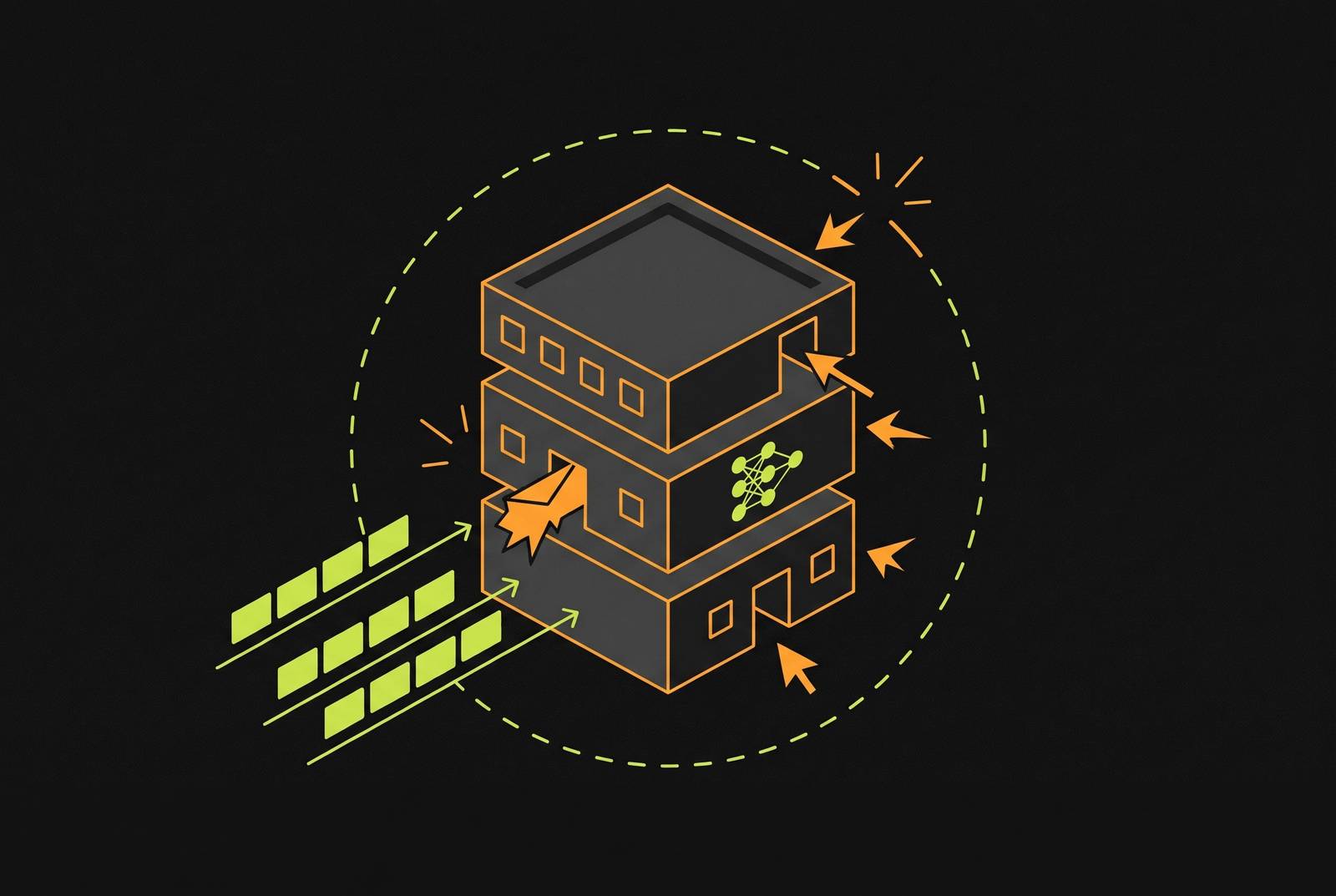
Model serving infrastructure combines familiar web vulnerabilities with attack paths built around model files, shared compute, and cloud permissions. The danger is how those weaknesses connect. Securing production ML requires testing the whole path from incoming request to model registry and runtime.
Why model serving infrastructure is a distinct attack surface from traditional web services
A production ML pipeline runs through six stages, from Data Collection to Feature Store, Training, Model Registry, Serving, and Monitoring. That diagram is also a map of trust. Each stage passes something the next stage relies on, so an upstream compromise can reach production inference without triggering a conventional security alert. Patel et al. (2026) describe different attack classes across these phases, each of which needs more than one shared control can provide.
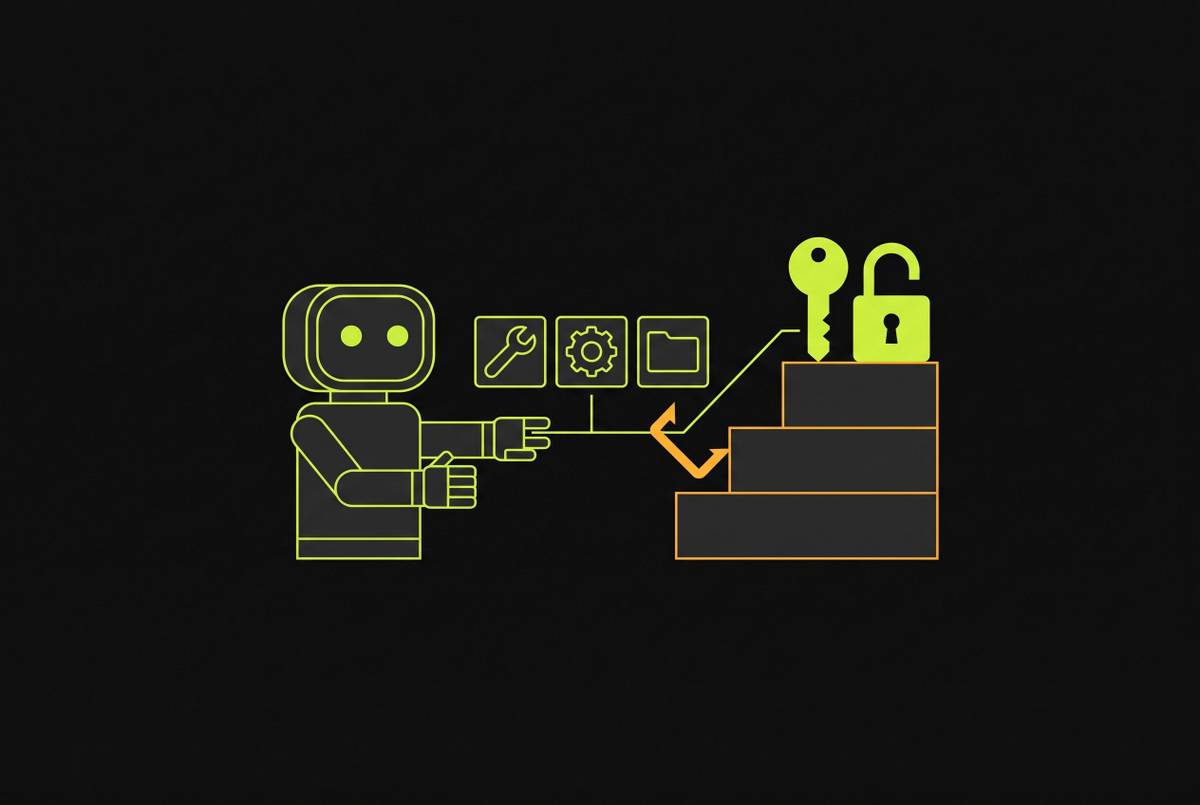
The serving endpoint sits at the public-facing end of those dependencies. It takes web requests, but the machine behind it also loads model artifacts, fetches remote inputs, and uses cloud services. Its permissions can therefore reach well beyond inference. A costly GPU instance may have one IAM role that gives it S3 access for weights, lets it write logs to CloudWatch, and lets it read configuration from Parameter Store.
That concentration changes what an endpoint compromise can expose. The networking code also often comes from ML engineers building vision models, multimodal APIs, and remote-weight loaders. Those paths may ship without security review. The larger API is connected to model-loading machinery and permissions that a conventional web review may never examine.
How unauthenticated APIs on inference servers create an open perimeter by default
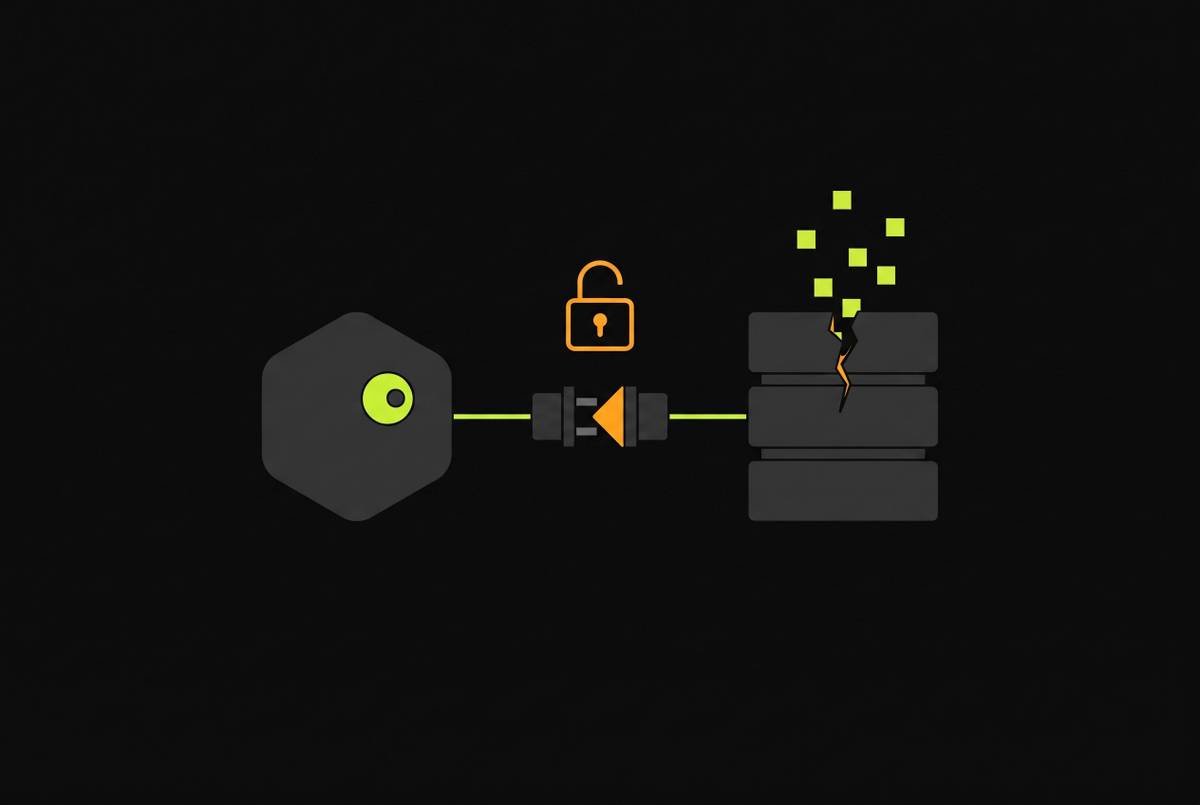
Major open-source inference servers ship with configurations that do not require authentication. The Cloud Security Alliance (2026) reports that about 175,000 Ollama instances are open to the public and have no authentication by default. CVE-2026-7482, known as “Bleeding Llama,” allows an unauthenticated attacker to extract API keys, environment variables, and conversation data from an unpatched server using three API calls.
In vLLM, CVE-2026-27893 shows trust_remote_code=True overriding an operator’s --trust-remote-code=False setting, enabling remote code execution. InstructLab CVE-2026-6859 also hardcodes trust_remote_code=True unconditionally. The distinction is important here. The InstructLab finding does not document the same override of an operator-configured flag, although both expose trust decisions embedded in code.
The perimeter also includes the software that builds and publishes the serving stack. The March 2026 LiteLLM supply chain compromise, CVE-2026-33634, used a malicious CI/CD dependency, Trivy, to enable backdoored releases that exposed AI provider credentials. A private VPC does not erase these paths. Shared feature stores, multi-tenant platforms, and CI/CD pipelines with broad IAM roles can give an attacker a way from a restricted foothold to the serving layer.
SSRF in AI inference servers: why the same bug class hits harder here than in a traditional web app
Sysdig honeypots detected the first exploitation attempt against LMDeploy CVE-2026-33626 on April 22, 2026 at 03:35 UTC, roughly 12 hours after the public advisory appeared on April 21, 2026 [1][2]. The vulnerable path was an image loader. LMDeploy’s load_image() function in lmdeploy/vl/utils.py fetched arbitrary URLs without validating internal or private IP addresses.
This is server-side request forgery, or SSRF. An attacker gets a server to make requests to destinations such as localhost, internal services, or cloud metadata infrastructure. In this case, potential targets included AWS IMDS, Redis at port 6379, MySQL at port 3306, and internal admin interfaces. Reaching a destination crosses a boundary the external caller could not cross directly.
On inference nodes, that boundary protects unusually broad permissions. A metadata request can expose IAM credentials for a role serving several GPU workloads, with consequences that depend on the role’s scope. IMDSv1 requires no session token and remains common on GPU AMIs and Terraform modules despite IMDSv2 being available since 2019. Meanwhile, outbound fetching is essential to many inference workflows. Servers retrieve weights, images, and documents, so this capability is built into their job rather than being an incidental feature that can simply disappear.
Model checkpoint deserialization as a supply chain attack on the model registry
A model checkpoint can be executable input. Pickle executes code during deserialization, while the file is being reconstructed. A malicious checkpoint can therefore run its payload when a machine calls pickle.load(), before any model weights are read. Predictions may still look normal. The backdoor does not have to disrupt the model to compromise its host.
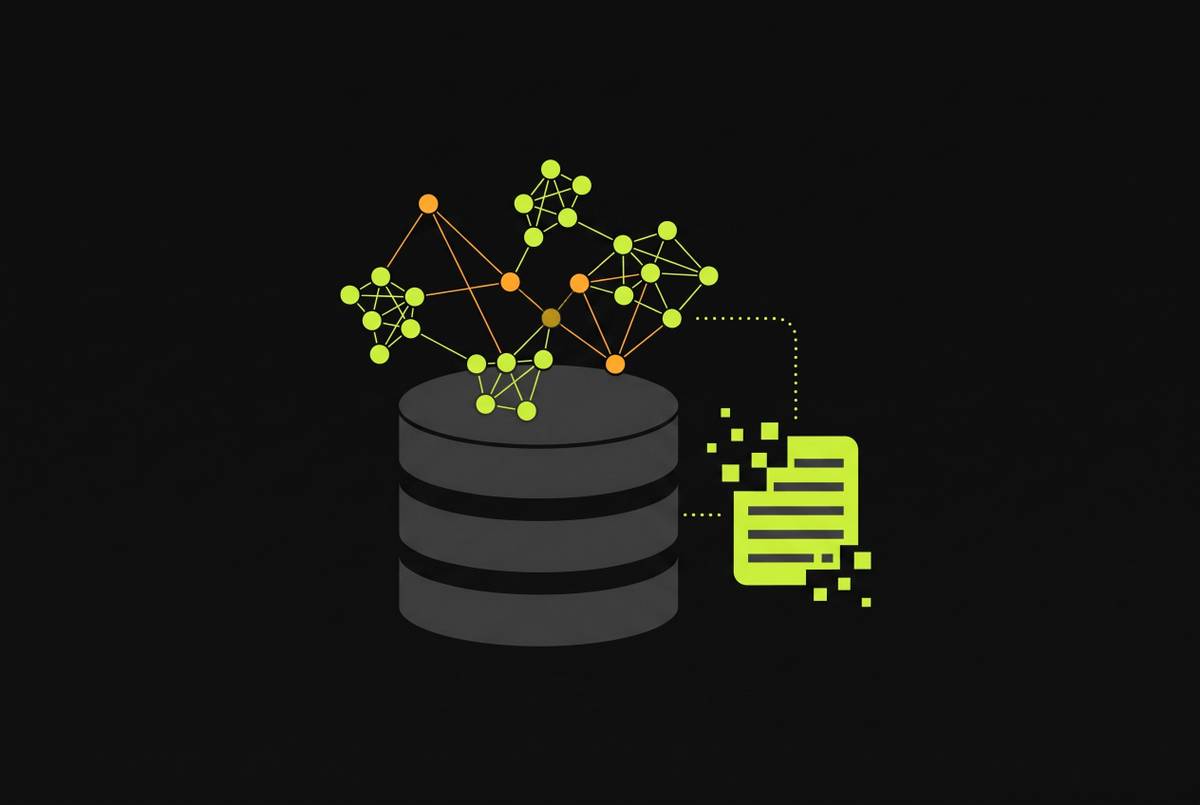
That behavior turns the model registry into a software supply chain boundary. If an attacker places a malicious checkpoint there, every machine that loads it can execute the payload. The affected machines can include training workers, serving nodes, and evaluation jobs. The registry distributes the compromise through an otherwise ordinary loading operation. Reviewing only the inference API misses that decisive event.
Deserialization risk also extends beyond the checkpoint itself. vLLM CVE-2024-9053 allowed remote code execution through unsafe cloudpickle.loads() in its RPC server. Internal communication paths need scrutiny too. The known checkpoint fix is to use SafeTensors or ONNX, which do not support code execution during loading, and reject .pkl, .pickle, .pt, .pth, .joblib, and .bin at registry ingress.
Multi-tenant resource exhaustion and LLMjacking: when stolen compute becomes offensive infrastructure
Shared inference infrastructure exposes more than stored data. Abuse can consume the expensive compute that other tenants depend on, turning resource access into both an availability risk and a financial loss. LLMjacking began with a straightforward criminal business model. Attackers scraped API keys from public repositories and misconfigured cloud storage, validated them against providers, and resold access through underground marketplaces. The Cloud Security Alliance documents that a single compromised Claude account could generate tens of thousands of dollars per day in inference costs.
Operation Bizarre Bazaar, running from December 2025–January 2026, showed how organized that trade had become. Attackers used Shodan and Censys to discover exposed LLM and MCP endpoints and obtain cloud credentials. They validated access against more than 30 LLM providers and listed it for resale through a commercial marketplace. Tens of thousands of attack sessions were recorded. The victim’s infrastructure supplied the product, while the victim paid the bill.
The purpose of stolen compute then widened. On June 12, 2026, Sysdig’s Threat Research Team caught an attacker using a misconfigured Ollama server as the reasoning engine for an attack pipeline that had several stages and was modeled on vulnerability assessment and penetration testing. It performed reconnaissance, mapped services to vulnerability signatures, generated proof-of-concept exploit code, and attempted command execution, with the model making structured routing decisions. Sysdig observed targeting of non-routable private addresses and known penetration-testing lab environments, suggesting active refinement. Even with that qualification, the case introduces potential legal and reputational exposure from infrastructure used against other targets.
How the vulnerability layers stack: the compounding risk of traditional and ML-specific weaknesses in one system
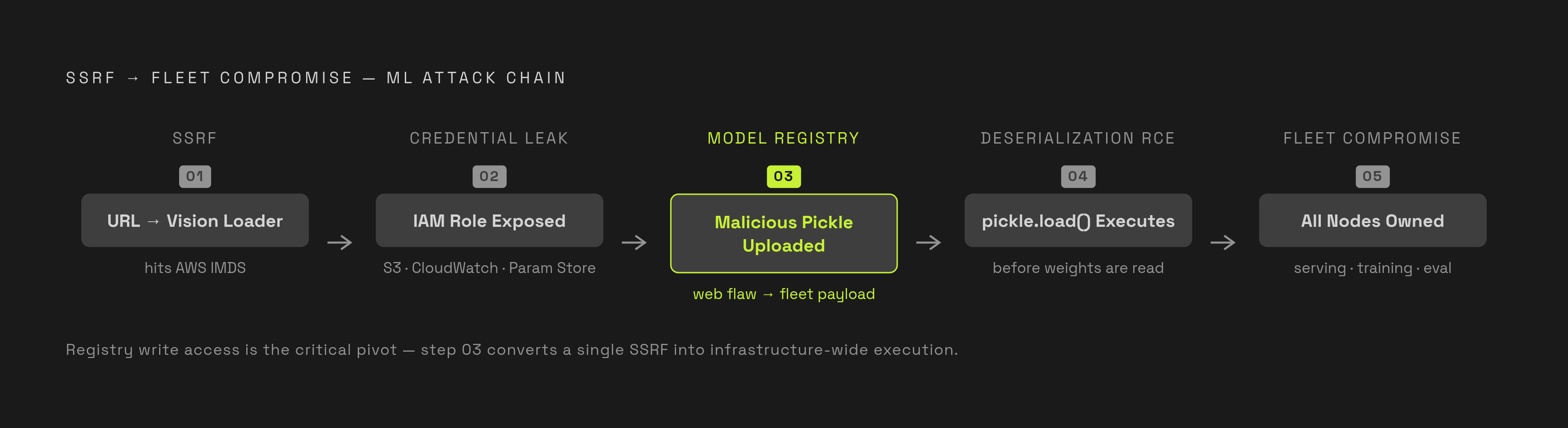
Consider a representative hypothetical attack chain. An attacker submits a URL to a vision model’s image loader, exploiting SSRF to reach the cloud metadata service and obtain IAM credentials. If those credentials grant write access to the model registry, the attacker can replace or upload a checkpoint. The registry then becomes the bridge. When serving nodes load the malicious pickle-based file, its payload executes on those machines.
SSRF alone may not give an attacker registry access, and even with registry access, code execution depends on whether the loading format can execute code. But when broad permissions and unsafe loading coexist, one web flaw can become a fleet-wide compromise. Hardcoded API keys or database credentials in model configuration files and serving scripts can shorten the route further. An attacker who can read those files through an exposed API or vulnerable request path gets the secret directly.
IBM X-Force research discussed by the Patel survey demonstrated valid-credential attacks against enterprise MLOps platforms including Azure Machine Learning, BigML, and Google Cloud Vertex AI. Those attacks enabled training data poisoning, model and training data theft, and exploitation of production pipelines. Infrastructure hardening is only one boundary. It does not settle credential hygiene, checkpoint format policies, or application-layer injection in ML tooling.
Why standard DevSecOps tooling does not cover this attack surface and what a real security review requires
Standard application checks inspect only parts of this chain. Static application security testing examines source code, but it does not by itself validate registry upload policies, inspect checkpoint formats, or test a running inference server’s authentication configuration. An image loader that comes with a framework may also be outside the application code under review. Dependency scanning has a different limit. It can find known CVEs in declared packages while missing a malicious model file or secrets kept in model configuration outside the main repository.
A valid hash does not establish a model’s safety if the artifact was poisoned upstream. A clean web scan also leaves open whether the way it loads is safe. ML pipelines depend on data, model artifacts, and behavior that is not always deterministic, so their controls need to follow those dependencies. The MITRE ATLAS framework, Adversarial Threat Landscape for Artificial-Intelligence Systems, maps the techniques attackers use across these parts of the system. The Patel survey applies it across MLOps phases and identifies the need for phase-specific mitigations.
The practical implication is a whitebox review of the full stack. Reviewers need serving code and custom middleware, registry configuration and upload policies, inference-node IAM assignments, CI/CD definitions, and runtime authentication settings. Checkpoint policy belongs in that review, including enforcement of non-executable formats at registry ingress. Timing is part of the method too. Annual snapshots cannot keep pace with continuously shipped model versions and exploitation that, as the LMDeploy case shows, can begin within hours of disclosure.
What a rigorous penetration test of ML serving infrastructure covers and how to evaluate whether a vendor can deliver it
A useful assessment must test the boundaries that make the attack chain possible. Its scope needs checkpoint deserialization, inference-server authentication bypass, SSRF through framework URL fetchers, GPU-instance IAM scope, and multi-tenant isolation. Otherwise, it is a web test with an ML label. Registry review and checkpoint validation must be explicit parts of the engagement.
Ask for direct experience with vLLM, Ollama, LMDeploy, TGI, or Triton. Ask whether the tester will examine inference-node IAM assignments and IMDS exposure, as well as the HTTP surface. The methodology should require working exploits that validate findings rather than treating every code-review concern as an established vulnerability.
Blackbox-only testing cannot assess registry policies, checkpoint formats, and internal serving configuration with the depth that whitebox access permits. A report containing only generic web findings, with no evidence of testing image loaders, checkpoint policy, or admin authentication, is a warning sign. Retesting also belongs in the engagement. Charging for it as a separate task makes retesting harder just where model versions and framework dependencies keep changing.
To address changes between assessments, continuous pull-request scanning should accompany the deeper test. New model versions, framework dependencies, and server configurations can change the attack paths, so an older report cannot show the state of what is deployed today. SOC 2 Type II, ISO 27001:2022, and HIPAA evaluations increasingly expect evidence of active testing against the actual production system. For a product built on ML serving, the decisive evidence is whether the assessment follows an attacker across its boundaries, from a request through credentials and model artifacts to execution.