What a Whitebox Cloud Penetration Test Finds That Blackbox Misses
It shows how code and IAM access expose attack paths outsiders can't.

A whitebox cloud penetration test finds attack paths that are hidden in source code, identity policies, and deployment configuration. Blackbox testing cannot reliably reach those layers from the outside. In cloud environments, a tester with access to the code and configuration can prove that a suspected weakness leads to compromise.
Why blackbox testing cannot reach the attack surface that cloud environments actually expose
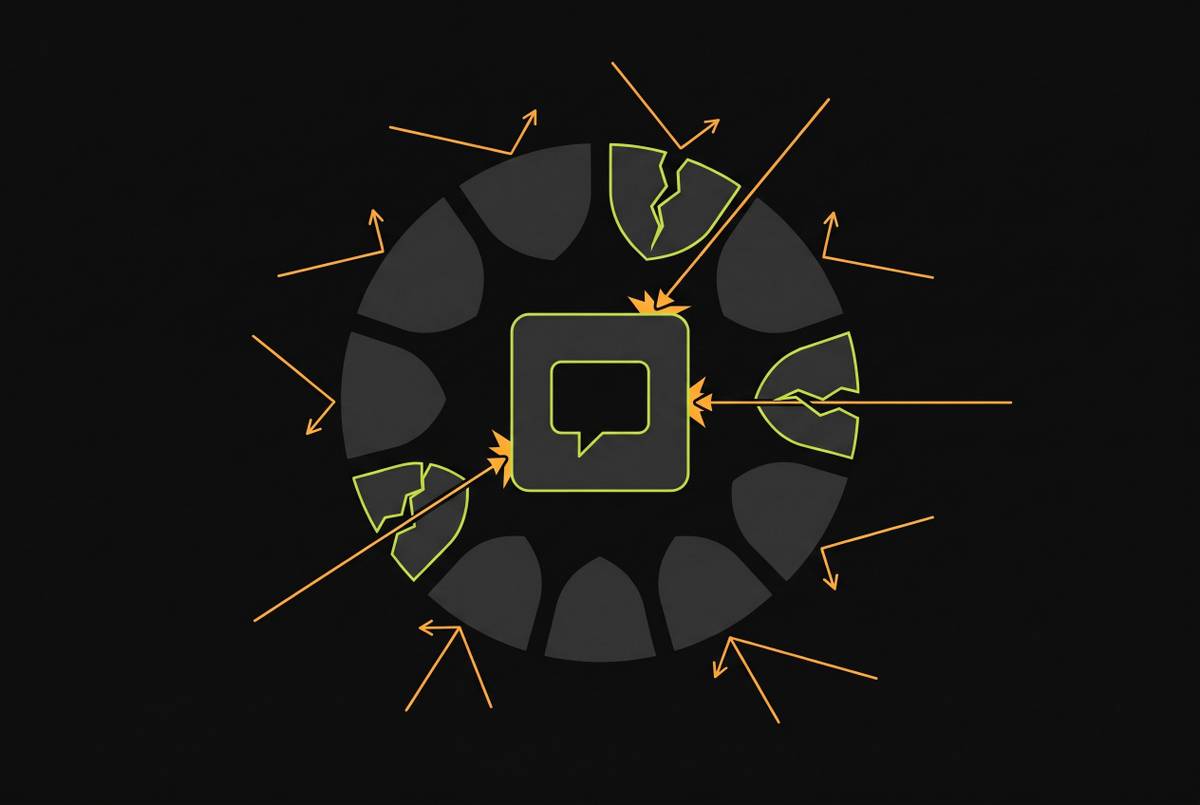
Cloud moved much of the risk inward, but many buyers still choose penetration testing with a perimeter-first view of security. The dangerous conditions now sit in IAM policies, infrastructure-as-code, serverless function logic, and repository secrets. They need not produce an unusual HTTP response or an open port. An external probe has little to work with because its view is mismatched with where the weaknesses reside.
The shared responsibility model makes that mismatch especially costly. The cloud provider secures the underlying platform, while the customer is responsible for identities, configurations, and application logic. Those are precisely the layers an outside-only test cannot inspect. Testing the public interface therefore leaves much of the customer's responsibility outside the assessment.
A tester might infer that an IAM role exists or see the effects of excessive permissions without being able to read its policies. Whether that role supports privilege escalation then remains an open question. Missing policy documents create a structural blind spot even for a skilled tester.
What a blackbox test concretely cannot find in a cloud environment
Consider an API key committed to a repository and later deleted from the current code. The key remains in version control history, where someone with repository access can retrieve it. The running application need not reveal its existence. A blackbox test of that application has no route to the historical credential because its scope never includes the evidence.
An authentication bypass can be just as quiet. A framework security filter might leave out a path pattern, so the bypass stays buried in configuration while requests return normal HTTP responses. Authorization testing has a related access problem. Broken object-level authorization requires at least one valid account and knowledge of the API structure to discover. OWASP's API Security Top 10 2023 ranks it first, underscoring that authenticated, structurally informed testing addresses a central risk.
Internal services create another gap in visibility. When microservices talk over internal networks, external testing cannot see their interfaces or the assumptions they make about service-to-service trust. Software composition analysis may identify a vulnerable dependency, but the affected code could be active or never called. Without the source, a blackbox tester cannot reliably distinguish an exploitable path from dead code, leaving room for both missed findings and over-reporting.
How whitebox access maps cloud attack paths that external testing leaves incomplete
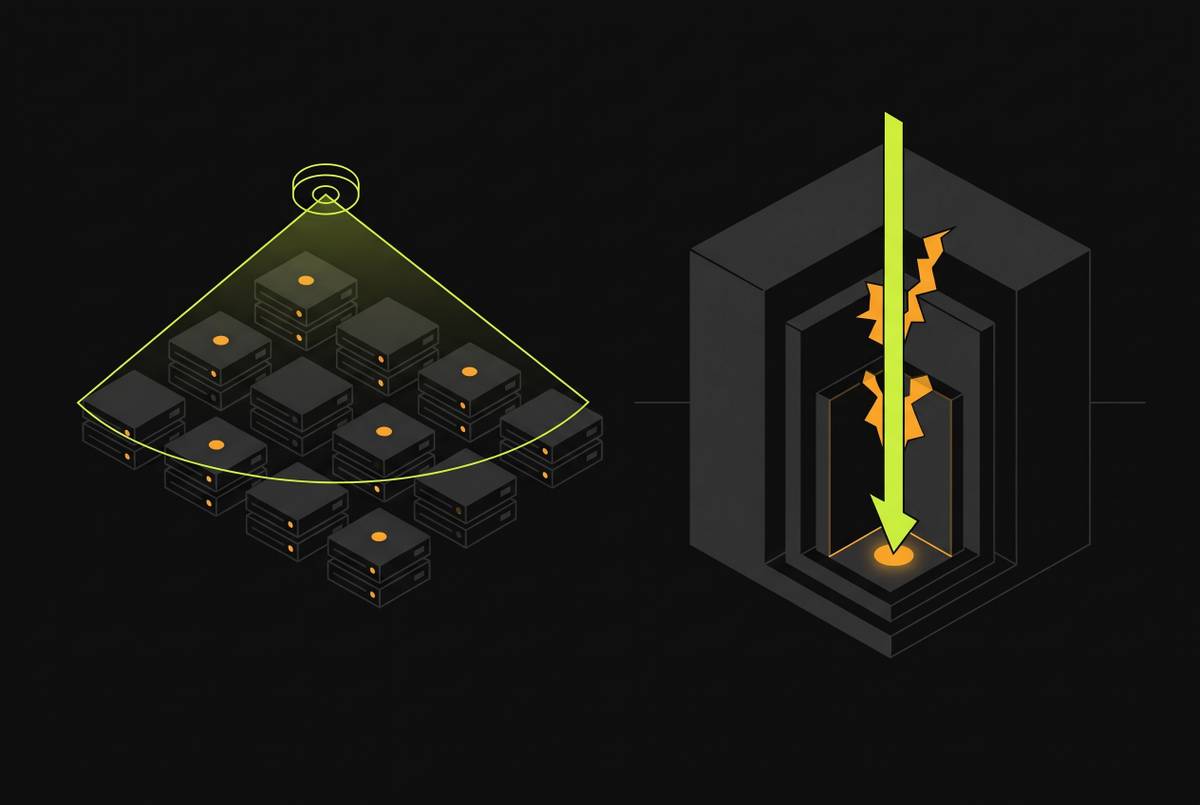
Whitebox testing starts with source code, IAM policy documents, infrastructure-as-code, API specifications, and deployment configuration. These give the tester something concrete to follow. Reading an IAM policy reveals the permissions assigned to a role, the trust relationships around it, and possible escalation paths. The tester can then check whether those permissions go beyond what the role needs for its job and build an exploit against the actual configuration.
That last step separates testing from a configuration review. Identifying an overly permissive role establishes a weakness, but not the full consequence. A penetration test investigates whether the role can support privilege escalation or whether exposed storage permits access to sensitive data.
For example, a readable secrets file can lead to a credential. The tester follows that credential to a misconfigured role, then examines whether the role permits data exfiltration. Access to the file, the identity configuration, and the data permissions makes the chain reconstructible. What looked like separate, low-severity misconfigurations can become a route to full compromise when tested together.
The same approach applies to application logic. A tester reads a Lambda function's event triggers, assumed role, and handling of untrusted input, then constructs an exploit against the flaw found in that code. For service-to-service calls, the tester compares the code that makes the call with the receiving service's access controls to find where trust is misplaced. This access also reduces discovery time. Instead of spending a material share of the engagement finding the application's shape, the tester can devote that time to logic analysis and exploit construction.
The five vulnerability classes whitebox cloud testing finds that blackbox routinely misses
Hardcoded secrets, classified as CWE-798, include credentials that are written into source code and long-lived credentials that are stored in CI/CD pipeline configuration. With access to the repository and pipeline, a tester can find the credentials and check how they are used, including copies left in version control history after changes to the running environment. The official CVE-2024-0865 record shows how hardcoded credentials in a deployed system can lead to local privilege escalation when logged in as a non-administrative user. It is not necessary for a secret to appear in an application response to create a serious exposure.
Over-permissioned IAM roles put excessive authority behind service accounts, Lambda execution roles, or EC2 instance profiles. The role's permissions are the decisive evidence. An external tester cannot read them merely by discovering a service, while a whitebox tester can examine the policy and build an escalation path from it. A working exploit then establishes what that excess authority permits rather than leaving the finding at “permissions look too broad.”
Logic flaws in serverless functions affect the order in which business actions run and the conditions that let them run. Steps may be skipped, replayed, or done out of order. An authorization check may protect the HTTP layer but not the event-trigger layer. Reading the function code exposes that split, while probing an external endpoint tests only the interface the tester can reach.
Insecure deserialization, classified as CWE-502, can allow code execution when certain serialization formats are used in Java,.NET, Python, PHP, and Ruby. The vulnerable path may not be reachable through an external probe unless the tester knows it exists. Source access removes that guesswork. The tester reads the deserialization code and constructs a payload for the actual implementation rather than relying on outward signs of a hidden code path.
Vulnerabilities that let an attacker induce a server to make unintended requests round out the five classes, with the metadata endpoint case illustrating the internal-only cloud risk. The public interface is not the whole exposure. For this class, code and configuration access help the tester investigate an internal attack path that an outside-only view leaves incomplete. Whitebox testing makes discovery of these five classes more reliable.
Why gray box is not a reliable substitute for whitebox in cloud environments
Gray box testing gives testers valid credentials and high-level architecture, but stops short of a full review of the code and configuration. That can be a reasonable trade in an application assessment. In cloud environments, however, it leaves the tester unable to inspect the IAM policies, infrastructure definitions, and function logic through which dangerous attack paths run.
The objection is often that whitebox testing gives the tester more information than a real attacker would have. An insider, a contractor with repository access, or someone using compromised developer credentials may already have the code. An exposed CI/CD pipeline can also give an attacker a realistic place to start.
Whitebox access therefore changes both which threats the engagement can model and how quickly it proceeds. It does not make an external attacker's perspective useless. For cloud buyers, the practical lesson is to treat access to IAM policies and infrastructure-as-code as the minimum.
What compliance frameworks actually require from cloud penetration testing, and where whitebox satisfies it better
SOC 2, HIPAA, and ISO 27001 do not prescribe a penetration testing methodology. An audit needs evidence of the scope of testing, proof of exploitability, and records that track remediation. A whitebox engagement is better positioned to produce that evidence because it records which code, policies, and configurations were examined. The methodology label alone earns nothing. A report still has to show the work.
ISO 27001 addresses this through controls A.8.8, Management of Technical Vulnerabilities, and A.8.29, Security Testing in Development and Acceptance. ISO 27002 has guidance to go with it that refers to periodic penetration testing as part of technical vulnerability management. Most certification bodies expect at least annual testing of the ISMS scope as a de facto baseline, with documented methodology and tracked remediation. ISO 27001 itself sets no fixed testing frequency. That distinction separates an audit expectation from an explicit requirement in the standard.
HIPAA's Security Rule Evaluation Standard, §164.308(a)(8), requires periodic technical and nontechnical evaluations, which penetration testing is widely used to support. HHS proposed in January 2025 to make annual penetration testing an explicit requirement, with July 2027 targeted for final action on that proposal. This remains a proposal. Its direction is nevertheless toward more specific testing obligations.
Scope documentation is where reports often fall short. Auditors need to know what was tested and what was found, and a whitebox report can document repository access, IAM policy review, and configuration coverage that an external-only engagement did not perform. Closure needs evidence too. PCI DSS 11.4.4 explicitly requires remediation and retesting to confirm fixes, while auditors for SOC 2, ISO 27001, and HIPAA expect evidence that critical issues were closed. Without a retest or remediation attestation, even a technically strong report may be insufficient.
What to ask a pen testing vendor to confirm they are doing whitebox cloud testing and not a configuration scan with a cover page
For buyers, the technical distinction becomes a set of questions to ask before signing. What source code and configuration access does the engagement require, and how will that access be structured? A genuine whitebox cloud test needs read access to repositories, IAM policy documents, and infrastructure-as-code.
Next, ask what evidence will prove exploitability. A risk score is not a working exploit. The vendor should explain how findings will show an attack path and go beyond flagging a setting that looks suspicious. Ask to see a sample report that includes exploitation evidence, the affected component traced to a specific line of code or policy statement, and remediation guidance. Vulnerability names and CVSS scores alone do not show that a penetration test occurred.
The follow-up process deserves equal attention. What does the retest cover, is it included, and can fixed findings be retested on demand? Those answers show whether the work ends with a point-in-time report or follows findings until they are closed. Charging separately for every retest, or offering no way to retest, gives buyers a reason to leave findings open. A clean report also needs a close look before it is cause for celebration, especially for a mature cloud application where very few findings may mean the testing was shallow.
For teams in active development, the final question is how the vendor handles changes between annual tests. Continuous pull-request scanning can check code as it enters the repository and shorten the time between annual tests when it would otherwise go unchecked. The depth of the point-in-time engagement requires separate evidence.