Vulnerability Scanning vs Penetration Testing
Scanners flag candidate flaws, but only exploitation proves which ones matter.
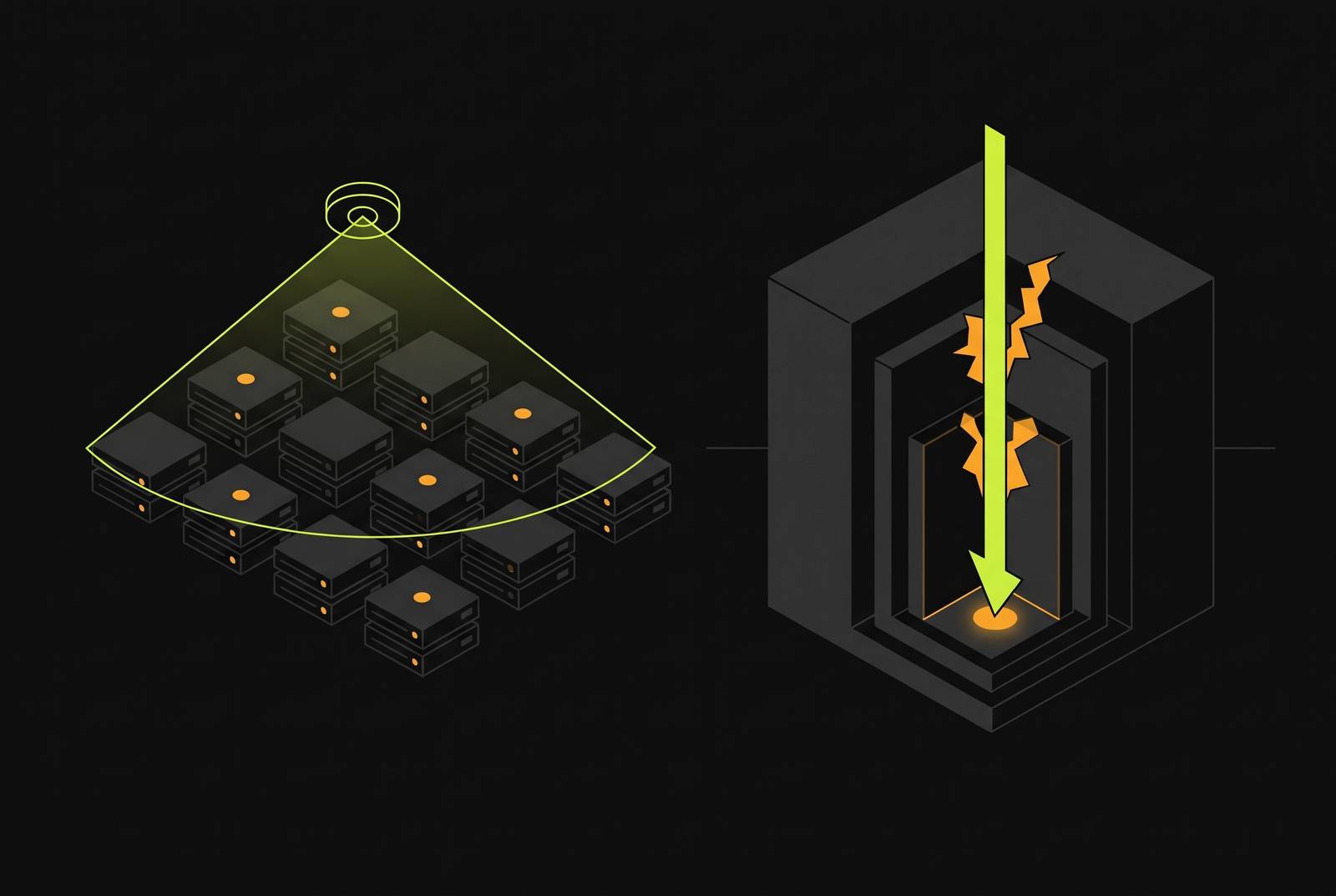
Scanning finds what might be broken. Pen testing proves what an attacker can actually do. Treating them as interchangeable leaves business-logic flaws, broken access controls, and chained attacks untested. For SaaS teams, the right approach is to use both, with exploitation and retesting connecting detection to proof.
Why vulnerability scanning and penetration testing answer different questions
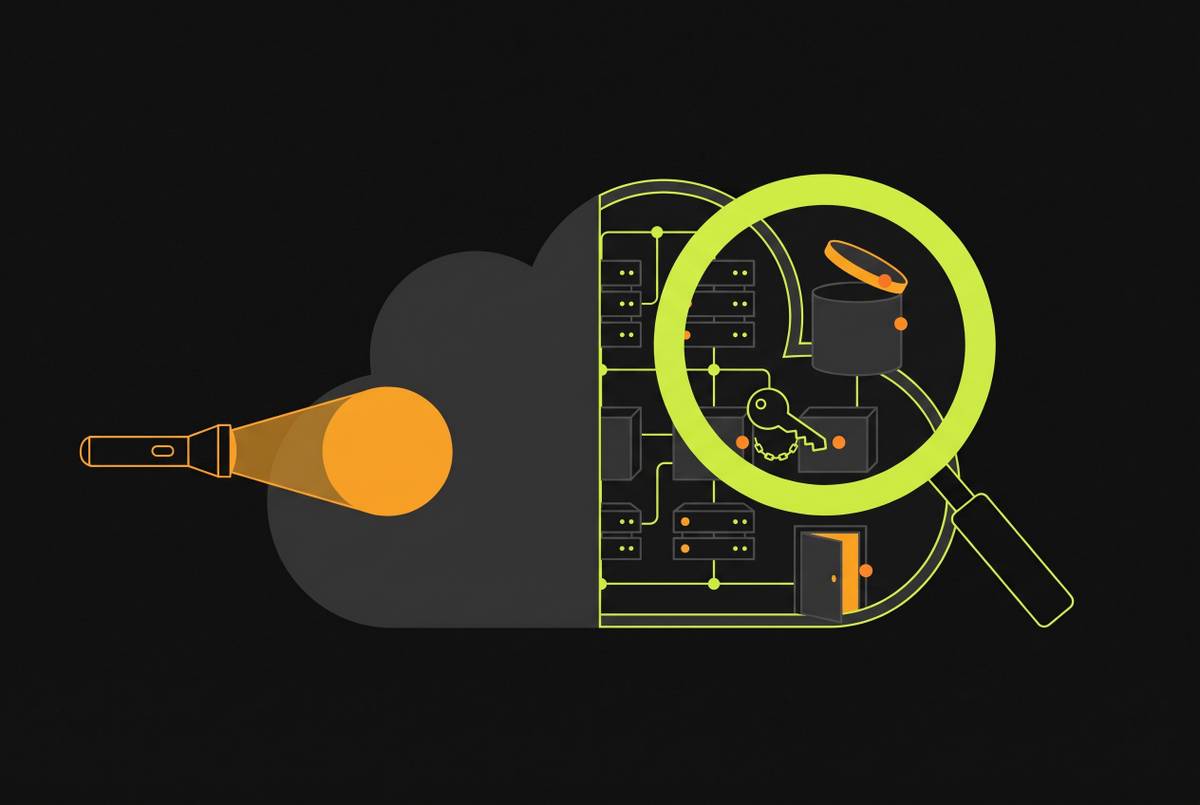
A vulnerability scanner is like a surveyor spotting loose window latches. A penetration tester opens the window, finds the stairwell, and tries to reach the server room. The distinction is what happens after discovery. Spotting a weakness does not establish where it leads, what blocks the route, or what an intruder can reach.
In software, scanning compares systems against known weaknesses, including outdated versions, missing patches, weak encryption settings, open ports, and default credentials. It reports candidates ranked by severity. A pen test investigates those candidates within an agreed scope and attempts to exploit them. An outdated service might be harmless in isolation, yet provide a route to a customer database when combined with a weak configuration and an exposed credential.
NIST SP 800-115 treats both methods as parts of security assessment that work together. It places scanning under “target identification and analysis techniques.” Identification is the operative word.
What automated scanning genuinely does well — and where its design stops
Scanning earns its place through speed, breadth, and repetition. It is cheap per run and can check an asset inventory weekly or daily for known weaknesses. That makes it useful for catching missing patches and misconfigurations as they appear.
The access given to a scanner changes its visibility. An unauthenticated scan probes exposed services without credentials, so it may have to infer configurations from the outside. An authenticated scan logs in to read installed software and settings. It can confirm details that an outside scan only guesses. Better access helps with detection, but it does not turn detection into exploitation.
Severity scores also have a defined purpose. CVSS scores help sort findings, but they do not establish whether a flaw is reachable or whether another control blocks the attack. False positives still need investigation. Results also age as systems and threats change, which explains the need for frequent runs. Even a well-tuned scan cannot reason across several minor findings to demonstrate how they combine into a breach.
The exploitation gap: what a clean scan cannot rule out
Consider a SaaS application that gets scanned every Sunday night. The report contains hundreds of findings, none critical, and the dashboard turns green. Yet nobody has tried logging in as one customer and reading another customer’s records. The scan has not answered that question at all.
That is the exploitation gap. Broken authorization, including insecure direct object references, or IDOR, depends on whether the application enforces the right boundary between users. A request can look normal in how it works while asking for data that belongs to another tenant. Detecting the failure requires knowing whose records the user should be allowed to read, then manipulating requests to test that rule. A database of known software vulnerabilities does not contain the application’s intended permissions.
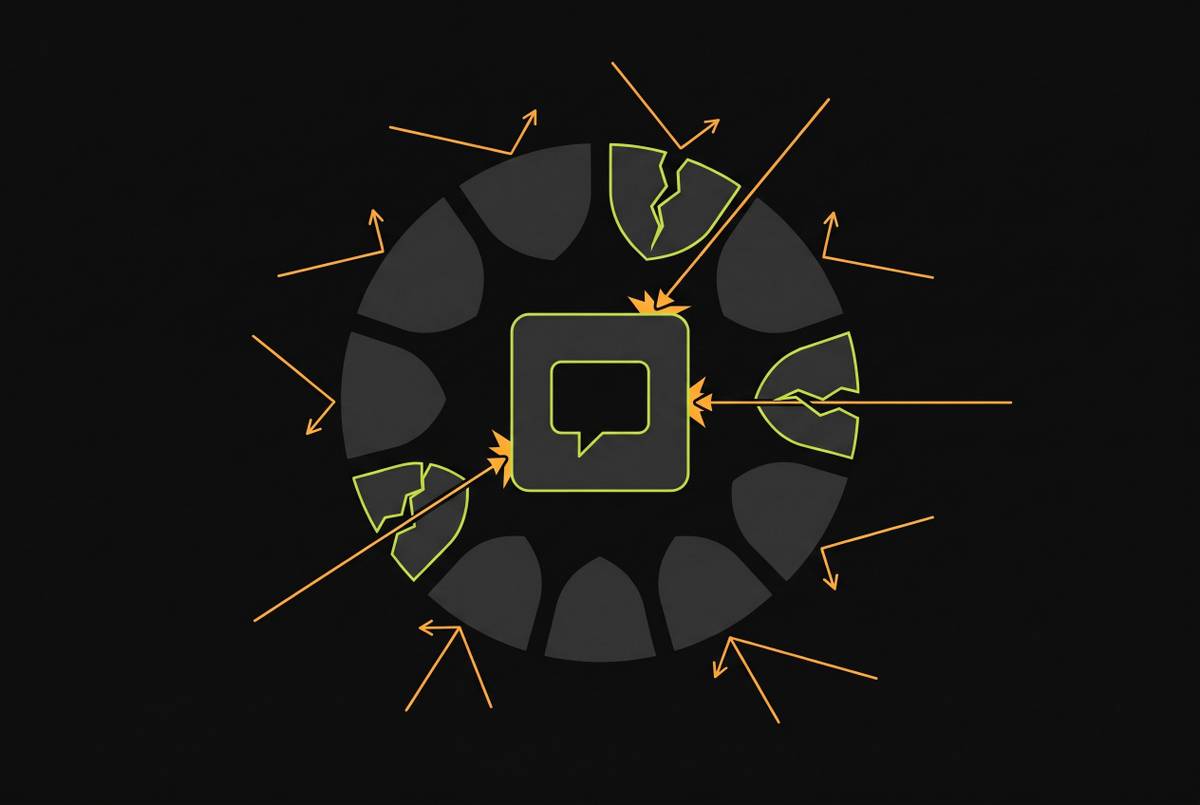
The same limit applies to business workflows and chained attacks. A password-reset flow may be open to abuse, or several modest weaknesses may combine into access to sensitive data. Both risks can still be present when a scan has no critical findings. An unverified score cannot establish the right repair order when the actual attack path remains unknown. Selling that scan as a pen test leaves the missing work hidden behind a reassuring label.
How penetration testing proves what a scan only hypothesizes
Scoping and preparation define the systems under test, the rules of engagement, and confidentiality terms. Information gathering then builds context from publicly available information and general system details. Vulnerability assessment follows, using automated tools as one input.
Active exploitation is where the methods separate. The tester develops an attack strategy and attempts to gain access, often aiming for administrator privileges or sensitive data. Findings are investigated manually, and weaknesses are combined where one may unlock another. NIST describes this search for combinations as a feature of most penetration tests. The tester also checks whether controls actually prevent actions such as one user accessing another user’s information.
Reporting records discovered and exploited weaknesses with remediation guidance. Retesting then checks whether the fixes close the demonstrated paths. Without that step, the engagement leaves its central question unresolved. The standard for a claimed exploitable finding is a working exploit that verifies an unverified “possible vulnerability. Supporting scan output can inform the work, but it is not proof of impact.
How black-box, grey-box, and white-box methodology shapes what a pen test can find
The tester’s starting knowledge determines how deeply an engagement can go. Black-box testing provides no internal context and relies on publicly available information. It closely resembles an external attacker’s starting position. However, time spent discovering the environment reduces the time available to investigate it, while internal weaknesses and logic in non-exposed paths may go untested.
Grey-box testing gives the tester an account, some documentation, and knowledge of part of the infrastructure. It models an attacker with limited legitimate access, such as a client, employee, or contractor. Can a normal user become an administrator? That question makes role boundaries a central part of the work. Grey-box testing balances realism, depth, and efficiency, making it a common recommendation for standard SaaS engagements.
White-box testing gives the tester full internal context, including source code, architecture and data-flow diagrams, API specifications, and accounts for every role. Less discovery work leaves more room for investigation. Access to cloud configurations and documentation also exposes paths that external testing may miss. For SaaS systems processing sensitive customer data, this is the approach to favor when comprehensive code and architecture coverage is the priority. Its advantage is visibility, and any test leaves open the possibility that vulnerabilities remain.
The vulnerability classes that only exploitation reveals
Broken authorization is the clearest example of why application knowledge is essential. A tester must know which tenant owns a record, which role may change it, and where those rules should apply. The same reasoning exposes a missing role check or a manipulated checkout price. There is no generic signature for intended business behavior. The test must compare that behavior with what a user can actually make the application do.
SQL injection illustrates a different limit of pattern matching. It can arise when user-controlled data enters SQL queries without proper sanitization. A scanner may catch known patterns on exposed endpoints, while custom query construction needs payloads that fit the application’s logic. Cross-site scripting has a similar divide. Reflected XSS on known parameters may be detected automatically, but stored and client-side variants in complex applications require manual investigation.
Insecure deserialization requires understanding how untrusted serialized data becomes an application object. Without proper validation, that process can provide a path to remote code execution. A version signature alone cannot explain the application’s handling of that data. Hardcoded secrets create another reason to inspect source code, where API keys, database passwords, private keys, and tokens may be embedded. White-box access helps surface these systematically, while exploitation establishes their usable impact.
Not every weakness in these categories is invisible to automation. The gap is between finding a pattern and proving its consequence in this application. Broken authorization makes that distinction especially important. A report about software versions cannot establish whether customer data is isolated, which also limits what it can demonstrate about the effectiveness of security controls.
What SOC 2, ISO 27001, and HIPAA actually require — and where scanning falls short of audit evidence
Compliance language needs the same distinction between a prescribed activity and evidence that controls work. SOC 2 CC4.1 identifies penetration testing as one way to meet its criteria, among other assessments and vulnerability scanning. It is not a blanket legal pen-test mandate. Nevertheless, recent pen-test evidence is an important audit-readiness expectation, and its scope must match the audit boundary. Testing only the web application leaves an evidence gap if the API and underlying infrastructure are also in scope.
ISO 27001 addresses technical vulnerability management in Annex A control 8.8 and security testing in development and acceptance in control 8.29. Neither says outright that penetration testing is required. That does not make scan output equivalent evidence. Auditors seeking support for control effectiveness need more than a list of possible weaknesses.
HIPAA requires particularly careful qualification here. The Security Rule currently has no explicit penetration testing requirement. HHS proposed an update in January 2025 that would require testing by a qualified person every 12 months, or more frequently when a risk analysis calls for it. At the sources’ publication, that proposal was not finalized, with final action targeted for July 2027 at the earliest. The proposed obligation must not be presented as an enacted rule.
PCI DSS makes the separation explicit. Requirement 11.4.1 sets prescriptive expectations for penetration-testing methodology documentation, but meeting those expectations does not formally satisfy every other framework. PCI DSS also requires regular vulnerability scanning and periodic penetration testing, each as its own control. Within that framework, one report cannot stand in for both jobs.
How to tell whether a "penetration test" you're being sold is actually a scan
For buyers, the practical response is to ask about the work before discussing the report’s format. Who will test the systems, and what offensive-security background and verifiable certifications do they have? Ask how much of the engagement is manual and which methodology guides it, such as OWASP WSTG, PTES, or ASVS. Then ask how the team tests business logic and access controls.
A redacted sample report makes those claims easier to check. Does it show exploited findings and proof-of-concept steps, or mostly CVSS scores? Ask whether remediation retesting is included in scope. A separate billable engagement for validation leaves the buyer paying again to establish whether the original attack path has closed.
Commercial details can also expose a mismatch. A fixed low price, a 24-hour turnaround, and no scoping call are signals of an automated scan wearing a suit. Per-IP or per-page pricing also needs a close look because the work of manual investigation does not grow neatly with the number of either. Unnamed testers, unverifiable qualifications, and undisclosed subcontracting weaken accountability. A rigorous engagement instead makes its testers, access requirements, exploitation work, and retesting obligations clear.
Where comprehensive coverage is the goal, the scope should include white-box access to code, cloud configurations, and documentation, supported by qualified human review. The report still represents the environment tested at that time. Continuous pull-request scanning helps cover changes between engagements, but it does not convert those checks into a full pen test.
Using scanning and pen testing together: a continuous security model for SaaS teams
The practical model starts with scanning to clear known issues, followed by penetration testing to investigate what remains. Scan results give testers a head start. Exploitation then establishes which candidates provide usable attack paths and exposes logic flaws that signature checks miss.
Scanning belongs in CI/CD pipelines and on a continuous schedule as code ships. Pen testing should also respond to events, including major releases, significant architecture changes, and a new compliance scope. When the question is whether a change could lead to a breach, detection alone is not the answer.
Higher-frequency exploit verification is also a direction for autonomous agentic tooling. Agents can support repeated validation and regression testing rather than leaving all exploitation work to annual engagements. People still need to use their judgment on business logic, new attack chains, and what is safe to do in production.
The final requirement is a closed verification loop. Each validated exploit should be linked to the responsible code repository, and the exact attack path should be retested before the repair ticket closes. Otherwise, the fix is assumed rather than demonstrated. That is the standard to hold a security program, and its vendors, to. Detection starts the investigation. Verified remediation finishes it.